Europe is among the most appealing locations worldwide to educate as an expert pilot. The system is mature, the flight terminals are varied, the weather condition instructs resilience, and an EASA permit lugs weight across a big component of the continent. At the same time, trip training in Europe can be confusing for novices. The policies are standardized in one feeling, yet schools, expenses, training styles, visa concerns, and task leads differ greater than lots of people expect.
If you are attempting to find out how industrial trip training really operates in Europe, the first useful action is to stop thinking about it as one neat pipe. It is better to a network of selections. The permit path is controlled, yet the lived experience relies on where you train, which educate you pick, how much cash you can commit in advance, and whether you are aiming for an airline company, company aviation, instructing, or something extra customized later on.
I have seen pupils show up with a simple picture in mind: register, fly, graduate, walk into an airline company cockpit. Some do relocate swiftly. Numerous do not, and not since they do not have capability. Regularly, the delays come from documents, climate, airplane accessibility, clinical issues, inspector organizing, or a training package that looked neat in a brochure but really felt extremely various in practice.
What "commercial trip training" suggests in Europe
In the European system, many expert pilot training is constructed around EASA, the European Union Aviation Security Company. Also where regional authorities administer permits, the usual framework matters since it produces an extensively identified typical throughout getting involved states.
For somebody who intends to come to be an airline company pilot, the end objective is not just a commercial pilot permit in isolation. In sensible terms, you are normally pursuing a plan that consists of a CPL, tool rating, multi-engine advantages, and the ATPL concept examinations, frequently described as a "frozen ATPL." That expression can appear odd initially. It just suggests you have finished the theoretical knowledge needs for an Airline Transport Pilot Permit and hold the flight training components required to function as an expert first policeman, but you have not yet constructed the trip time called for to "unfreeze" it into a full ATPL.
That difference matters due to the fact that airline companies do not employ people with a full ATPL from day one. They employ candidates with a frozen ATPL, then those pilots gain experience in airline company service until they fulfill the total time needs for the full licence.
The European path is structured, yet not constantly direct. Some people start from zero experience. Others currently hold a PPL. Some train full-time in an incorporated program. Others build the permit piece by piece through modular training. Both courses can work.
The main licence course, in plain language
The broad sequence is straightforward even if the details are not. You generally begin with a Course 1 clinical. Without that, there is little feeling costs serious money. After that, numerous pupils finish an Exclusive Pilot Permit, unless they are on an incorporated program where the early private-level training is embedded in the program. Then come hour building, ATPL theory, commercial trip training, tool training, and multi-engine training. Relying on the path, you may likewise finish a multi-crew cooperation program and jet orientation training.
A brief version of the usual steps looks like this:
Class 1 medical PPL or integrated abdominal muscle initio phase ATPL theory and time building CPL, ME, and IR training MCC, commonly with JOC, then airline company applicationsThat is the neat version. The actual version has overlap. A modular student might complete hour structure while researching concept, then add a night rating, then do multi-engine and instrument work in a sequence formed by college organizing or spending plan. An integrated trainee may follow a snugly handled training schedule with really little flexibility but a clear pace.
Integrated or modular, which path matches you?
This is the concern nearly every aspiring industrial pilot in Europe asks first, and it deserves reducing for.
Integrated training is the all-in-one method. You sign up in a solitary program, typically with one college, and complete an organized course from little or no experience to icy ATPL level. The allure is obvious. The timeline is more clear, the curriculum is coordinated, and some schools have airline company links that aid with interviews or analyses. If you thrive in permanent research, desire a controlled atmosphere, and can pay for the price, integrated training can be efficient.
Modular training is extra versatile. You complete each stage independently, often paying as you go. Lots of trainees work part-time or full-time while training. Others move in between schools to locate far better airplane, reduced prices, or more powerful tool training. Modular training can be significantly less expensive, specifically if you are disciplined and avoid duplicating stages needlessly. It likewise provides you even more control.
The downside of incorporated training courses is that they are expensive and front-loaded. If you find midway through that the institution is improperly arranged, transforming course can be excruciating economically and administratively. The drawback of modular training is that you need to handle your very own development. If you let voids expand in between phases, abilities can discolor and the last expense rises.
I have met superb airline company pilots from both courses. In practice, the far better question is not which course is "best," however which path fits your finances, discovering style, and appetite for self-management.
What training actually costs
This is where many plans materialize very quickly.
A full industrial training course in Europe can vary extensively relying on nation, airplane kind, college credibility, and whether holiday accommodation, exam fees, tools, and taxes are included. A modular course from zero to icy ATPL might land someplace around EUR60,000 to EUR100,000 in a cost-conscious arrangement. Integrated courses often sit greater, generally around EUR80,000 to EUR130,000, and some costs academies surpass that.
Those are not guaranteed numbers, and they conform time. Gas, insurance, upkeep, and teacher scarcities influence rates. The surprise problem is not just the headline tuition. It is the added investing that appears in tiny pieces: retests, additional hours, medical revivals, chart registrations, lodging throughout concept blocks, traveling for skill tests, headset purchase, language effectiveness checks, and the unpreventable couple of flights lost to weather or technical grabs that break continuity.
One student can finish near to the sticker price. An additional, equally proficient, could invest thousands extra since winter climate postponed IR slots, the first institution lacked airplane availability, or a fallen short test set off retraining. That is typical. Construct a buffer into your budget. If you can only afford the precise priced estimate quantity, you are strolling into training with unneeded pressure.
Choosing the appropriate nation and school
Training in Spain feels different from training in the Netherlands. Training in Greece feels various from training in Ireland. Also within the very same country, two part 107 training colleges can provide extremely various experiences.
Weather is the very first obvious variable. Southern Europe commonly allows extra consistent flying days and can shorten the calendar time for aesthetic training. Northern Europe might bring more climate cancellations, but that can additionally make you an extra versatile pilot, specifically when instrument training begins. There is no perfect response. Sunny locations aid continuity. Combined climate develops functional maturation. A lot of students take advantage of some direct exposure to both.
Airspace issues as well. An institution based at a quiet landing strip may offer you cheaper flying and less taxi hold-up, which is exceptional for early handling skills and hour structure. A school near hectic regulated airspace can hone your radio job, procedural discipline, and self-confidence around industrial website traffic. Once more, equilibrium is far better than ideology.
When examining a college, look beyond glossy images. Ask candid, useful inquiries. How many aircraft are really serviceable on a regular week? What is the teacher turnover? Exactly how far ahead are ability examinations scheduled? What occurs if your instructor leaves midway with a stage? Is the priced estimate cost based on sensible hour total amounts or on regulatory minimums that really few trainees in fact achieve?
A college can have a streamlined website and still be chaotic operationally. A less showy school can run like clockwork and create extremely strong pilots.
The medical is not a formality
This is worth stressing because many individuals take too lightly it.
A Class 1 medical is the gatekeeper for specialist pilot training in Europe. You require it from an authorized aero-medical facility, and you should get it before dedicating large amounts to training. A regular issue in regular life can come to be a licensing complication in air travel if it impacts vision, cardiovascular wellness, medicine use, mental wellness history, or various other criteria appropriate to flight safety.
Most applicants pass without dramatization, yet "most" is not a preparation method. If you have a case history that might question, handle that early and through appropriate channels. Do not rely upon on-line forums for confidence. One of the hardest scenarios I have actually seen is a trainee that paid a down payment, moved nations, and just after that discovered that additional reports were needed before medical qualification can be confirmed.
Even when you pass, remember that a Course 1 is not a single occasion. It has to be renewed, and your future employability relies on maintaining it.
The concept stage is larger than people expect
The flying obtains the attention, naturally. It is exciting, visible, and very easy to visualize. The concept is usually the component that captures pupils off guard.
ATPL concept in Europe is wide and requiring. You will cover subjects like air law, weather forecasting, trip planning, efficiency, basic navigation, radio navigating, tools, mass and equilibrium, operational treatments, and human efficiency. Whether you examine with class direction, distance understanding, or a crossbreed system, it is not laid-back material. It requires time, endurance, and consistency.
Students that have actually been out of formal study for a couple of years sometimes locate this phase harder than the flight training itself. Not since the material is impossible, yet since it requires self-displined research study over months, often while managing financial resources and flight reservations in parallel.
If you are choosing in between colleges, ask exactly how they support the theory stage. Excellent concern financial institutions assist, but they are not enough by themselves. You want trainers who can explain principles, not simply trainer you to pass examinations. The difference reveals later in tool flying and airline assessments.
Building trip time, and why it matters just how you do it
Hour structure can be one of the most enjoyable parts of the process if come close to well. It can additionally come to be pricey, repetitive, and strangely unproductive if done without intention.
You requirement flight time, however not perpetuity is equal in regards to development. Traveling the same local route again and again may log numbers, but it does not stretch your decision-making much. Cross-country flying throughout different airspace frameworks, weather condition patterns, and functional settings tends to make you sharper. European traveling is particularly good for this since boundaries enter play, languages differ, and treatments can move sufficient to keep you notify without ending up being unmanageable.
A pupil that invests hour building attentively frequently comes to CPL and IR training with much better situational recognition and radio confidence than somebody who just accumulated hours in a narrow bubble. That does not suggest every trip needs to be an expedition. It means variety helps.
Instrument ranking, where lots of pupils truly become professional
The instrument rating is where the training typically begins to feel much less entertainment and extra operational. Flying properly by referral to instruments, managing work, staying ahead of the airplane, managing technique plates, instruction treatments, and maintaining radio communication crisp under pressure, this is the stage that changes people.
It is also where college top quality comes to be extremely noticeable. A well-run instrument program has clear SOPs, solid rundown culture, and instructors that teach thinking, not simply hand motions. A weak one develops trainees that can complete a checkride yet battle with real-world tempo.
If you can, train at a school that offers regular accessibility to regulated airspace and a good variety of tool procedures. Simulators can be very useful right here, especially for procedural rep and scan discipline, however they function best when integrated appropriately rather than used as an inexpensive box-ticking substitute.
Multi-engine training and the shift to airline-style thinking
Multi-engine training is frequently short about the rest of the trip, yet it brings psychological weight. You are relocating into faster, much more intricate airplane, and the handling differences are just component of it. What really alters is your feeling of effect. Rates are higher, treatments tighten up, crooked circumstances become severe, and checklists start to really feel much less like training artefacts and even more like expert tools.
This is likewise the duration when lots of trainees start MCC, often incorporated with JOC. These courses present team sychronisation and an extra airline-oriented atmosphere. Some people reject them due to the fact that they are fairly short. That is a mistake. A strong MCC training course can disclose a great deal concerning just how you interact, keep track of, split tasks, and manage mistakes with an additional pilot in the loop.
Airlines often care less concerning whether you looked "captain-like" in MCC and more about whether you were trainable, calm, procedural, and collaborative.
Airline pathways, cadet plans, and the working with reality
Europe has durations of strong airline company demand and periods of abrupt contraction. Any individual going into training ought to be reasonable about that cycle. There is no irreversible hiring boom. There is also no single factor at which the market comes to be helpless. It moves.
Some schools have airline company partnerships or cadet programs. These can be useful, but they ought to be recognized clearly. A "collaboration" may imply anything from a real analysis path to bit more than brand association and occasional presentations. Read the phrasing meticulously. "Preferred gain access to" and "ensured meeting" are not the very same point, and neither equals a work offer.
What helps most in airline company hiring is a mix of strong training documents, clean examination efficiency, expert mindset, great communication, and preparedness for simulator and competency-based assessments. Airlines do not simply buy flight hours. They buy potential.
A useful means to evaluate a college's job claims is to ask what grads from the last 12 to 24 months are doing currently. Not only the best few. Inquire about the middle of the pack.
If you are not an EU citizen
For non-EU trainees, Europe can still be an exceptional training environment, but there are added layers. Visa regulations, right-to-work constraints, licence conversion strategies, and airline eligibility all become vital early.
Training in Europe does not automatically imply you will be able to help a European airline company afterward. Several airlines call for the lawful right to live and work in the appropriate nation or region, and that problem can matter as long as your training criterion. Some non-EU pupils train in Europe specifically because they want an EASA licence for usage in other places, or because they prepare to convert it later. That can make sense, yet it must be part of your strategy from the beginning, not a second thought after investing a large amount of money.
Common mistakes that make training harder than it requires to be
A couple of patterns turn up time and again, and they are usually preventable:
- starting training prior to securing a Course 1 medical choosing a college based only on headline price underestimating living costs and added fees letting lengthy voids create in between training phases assuming airline placement is effectively guaranteed
None of these errors implies the desire mores than. They merely make the road more expensive and more stressful. Trip training has enough built-in flight schol friction currently. It aids to get rid of the preventable kind.
Day-to-day life throughout training
People frequently ask what commercial training actually feels like on a normal week. The solution depends upon the phase, but it is generally much less glamorous and extra absorbing than outsiders imagine.
A trip training day might entail turning up early, inspecting weather and NOTAMs, assessing aircraft technology logs, talking about a lesson plan, waiting for a delayed return from the previous sortie, adapting to a maintenance issue, flying for one and a fifty percent hours, then spending an additional hour on debrief. Add self-study, traveling, sim sessions, and exam preparation, and the days fill up quickly.
There is additionally a psychological rhythm to it. Some weeks you really feel sharp and well-versed. Other weeks you really feel as if you are all of a sudden behind the aircraft on whatever. That variation is normal. Training is not a straight climb. Skills clear up in layers. One difficult stage does not predict your last standard.
The pupils that tend to do well over time are not constantly the flashiest on the first day. They are frequently the ones who prepare continuously, take feedback without ego, and maintain going after sub-par sessions instead of dramatizing them.
How to judge whether you are proceeding well
It is very easy to focus on hours, pass marks, or whether somebody else in your associate appears to be relocating much faster. Those metrics issue, but they do not inform the whole story.
A more powerful measure is whether your margin is improving. Are you assuming better ahead? Are you making less repeated errors? Are your radio calls coming to be cleaner without seeming forced? Are you utilizing lists naturally rather than theatrically? Are you recouping from shocks with much less emotional spike?
Professional traveling is not regarding perfection in training. It is about developing uniformity, understanding, and judgment. Some really capable pilots required additional hours in one phase because a specific ability took longer to click. That is annoying in the moment, yet it is not a career-ending sign. What issues is whether the knowing sticks.
After training, the first work might not be the last plan
Many striving airline company pilots assume the first function after training need to be, preferably, an airline seat. Sometimes that takes place. Sometimes the first functional step is flight instructing, survey flying, ferryboat job, or another entry-level flying task that constructs experience and develops professionalism.
There is no pity in that course. As a matter of fact, instructing particularly can be an impressive foundation. Mentor forces you to comprehend procedures deeply, hone your interaction, and maintain self-control in basic flying. Lots of airline company pilots that turned up via instructing are remarkably solid because they spent years describing fundamentals and identifying weak behaviors in others.
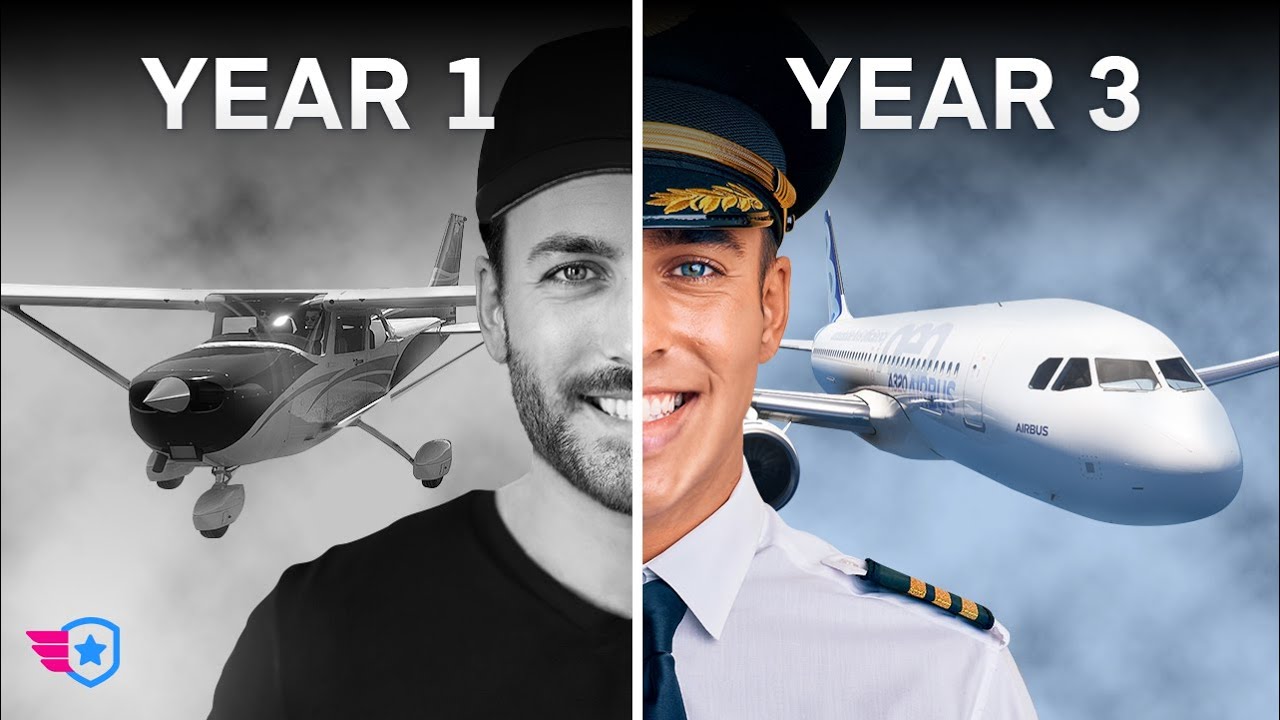
The crucial point is to think in phases. Commercial flight training obtains you to employability, not throughout of the profession.
A grounded method to come close to the entire journey
If you are severe concerning training in Europe, the most intelligent state of mind is neither enchanting neither cynical. It is useful. Get the clinical early. Compare colleges thoroughly. Maintain financial reserves. Ask difficult inquiries. Expect hold-ups somewhere in the process. Treat theory as genuine job. Construct hours with function. Choose top quality guideline over marketing gloss whenever the two conflict.
Europe provides excellent training opportunities, yet success below is seldom about finding the single "finest" college or nation. It has to do with developing a systematic strategy that fits your circumstances and then remaining adaptable when real life intrudes, as it always does.
For many people, that path becomes one of the most rewarding jobs of their life. It is requiring, costly, and sometimes frustrating. It additionally shows technique, humility, technological ability, and calm under pressure in such a way very couple of professions do. If you enter it with open eyes and a durable plan, Europe can be an extremely strong location to begin an industrial flying career.